






Drugs You Should Not Stop Abruptly: Why Cold Turkey Is Dangerous
Find which common prescription drugs to not quit cold turkey to avoid severe withdrawal and life threatening complications and get urgent medical support
Talk to our admissions team
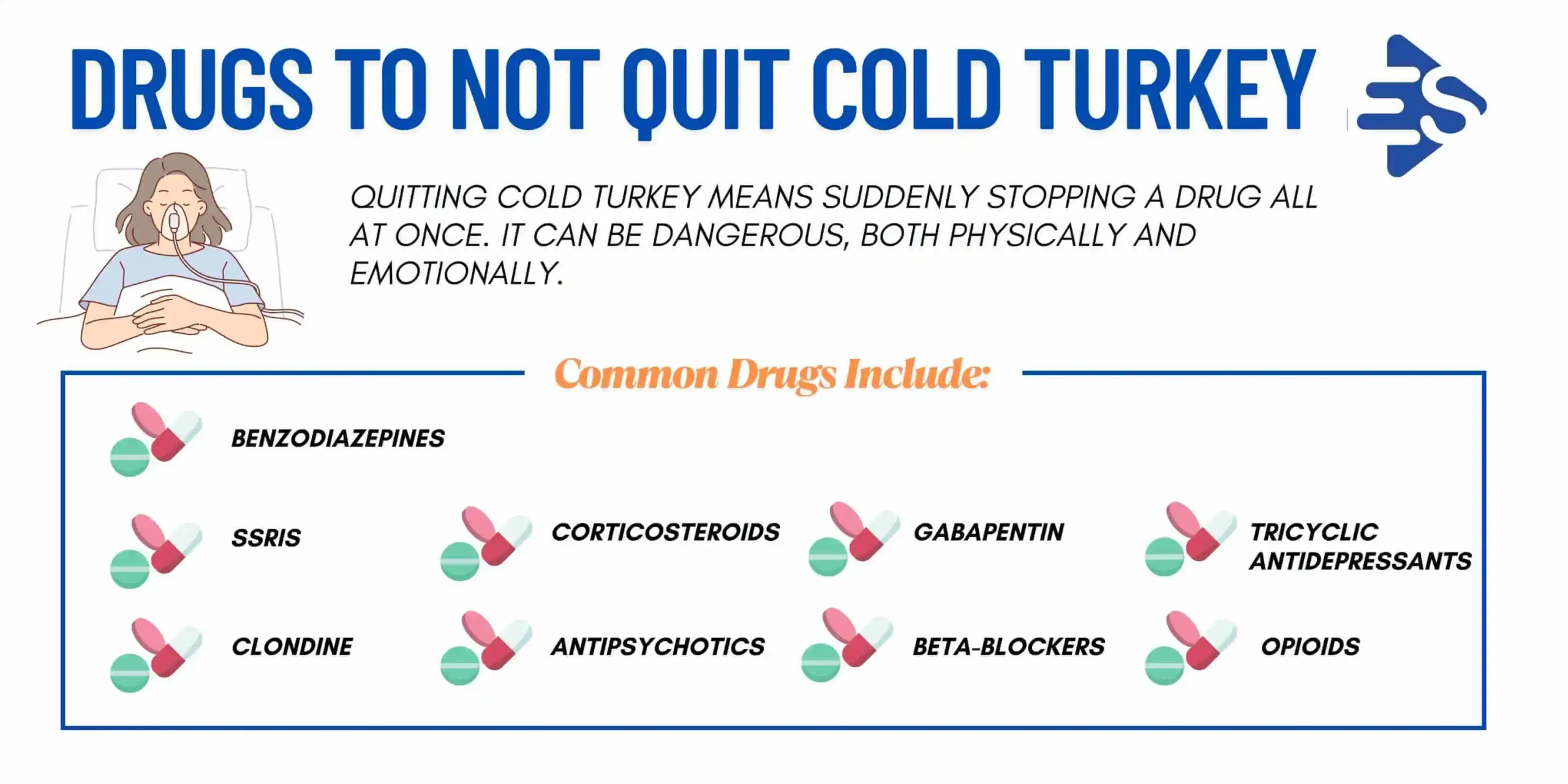
The medications you should not stop abruptly include benzodiazepines, antidepressants, antipsychotics, opioids, corticosteroids, gabapentin, beta-blockers and clonidine. Stopping any of them suddenly can set off withdrawal or a sharp rebound of the condition the drug was treating, from seizures to surging blood pressure to the return of psychosis. The safe way off every one of them is a gradual taper planned with your prescriber, never a cold-turkey stop.
The danger is rarely the drug itself. It is the speed of stopping. Your brain adapts to a daily dose, and pulling that dose away overnight forces a system that has rebalanced around the medication to lurch back with no warning.
Why Stopping a Medication Suddenly Is A High Risk
Your body adjusts to any drug you take every day. Receptors shift in number and sensitivity so that normal function starts to depend on the medication being there. Take it away in one step and the system is left unbalanced, which is what produces withdrawal symptoms and rebound effects.
This is physical dependence, and it is not the same thing as addiction. Dependence means your body has adapted and needs a careful taper. Addiction means compulsive use that continues despite the harm it causes. Most people stopping a prescribed antidepressant or beta-blocker are dealing with dependence rather than a drug problem.
What Medications Should Not Be Stopped Abruptly?
Nine common drug classes carry a real risk when stopped suddenly. The table below shows what each one treats and what abrupt stopping can trigger, so the reason for a taper is clear before you reach the detail on each.
| Medication Class | What It Treats | Risk of Stopping Abruptly |
|---|---|---|
| Benzodiazepines | Anxiety, insomnia | Seizures, severe rebound anxiety, tremors |
| Antidepressants (SSRIs, tricyclics) | Depression, anxiety | Dizziness, nausea, mood crash, electric-shock sensations |
| Antipsychotics (e.g. olanzapine) | Schizophrenia, bipolar disorder | Rebound psychosis, agitation, insomnia |
| Opioids | Pain | Flu-like withdrawal, vomiting, cravings |
| Corticosteroids | Inflammation, asthma, arthritis | Adrenal crisis, fatigue, low blood pressure |
| Gabapentin | Nerve pain, seizures | Anxiety, insomnia, rebound pain |
| Beta-blockers | Blood pressure, heart conditions | Racing heart, blood pressure spike, chest pain |
| Clonidine | Blood pressure, withdrawal support | Sharp rebound rise in blood pressure |
Benzodiazepines
Benzodiazepines such as Valium, Xanax and Ativan are prescribed for anxiety and insomnia. They calm the nervous system, and the brain compensates by dialling down its own calming signals. Stop suddenly after regular use and that compensation is exposed, which can bring on severe anxiety, tremors and, at worst, seizures that are life-threatening.
This is one class where stopping cold can be more dangerous than the original problem. Doctors taper the dose down in small steps, sometimes switching to a longer-acting option to smooth the process. A supervised reduction is the difference between a manageable few weeks and a medical emergency.
Antidepressants: SSRIs and Tricyclics
SSRIs such as fluoxetine and sertraline, along with older tricyclic antidepressants, treat depression and anxiety by adjusting the brain’s serotonin signalling. Stop them abruptly and many people hit what clinicians call discontinuation syndrome: dizziness, nausea, vivid dreams, irritability and brief electric-shock sensations through the head and arms.
These symptoms are not dangerous the way a benzodiazepine seizure is, but they are unpleasant enough to derail recovery, and they are easily mistaken for the depression returning. A slow taper over weeks lets serotonin levels settle gradually. Anyone who stops and feels suddenly unwell within days is usually looking at discontinuation rather than relapse.
Corticosteroids
Corticosteroids such as prednisone treat inflammation in asthma, arthritis and severe allergies by suppressing the immune system. Taken for more than a couple of weeks, they signal the adrenal glands to stop making the body’s own steroid hormones. The glands effectively go quiet.
Stop the medication suddenly and a gap opens up. The drug is gone, but the adrenal glands have not yet woken up to replace it. The result can be an adrenal crisis, with severe fatigue, dizziness and a dangerous drop in blood pressure. This is why steroid courses are tapered down, giving the adrenal glands time to restart.
Antipsychotics, Including Olanzapine (Zyprexa)
Antipsychotics treat schizophrenia and bipolar disorder, and olanzapine, sold as Zyprexa, is one of the most widely prescribed. It works by dampening dopamine and serotonin activity in the brain, which settles the hallucinations, delusions and agitation of psychosis. It is effective, and it is not addictive: antipsychotics produce no craving, no high and no compulsive use.
Olanzapine does have side effects worth knowing. The common ones are weight gain, increased appetite, drowsiness, dry mouth and dizziness. Many people also feel noticeably sedated or mentally flat, especially in the first few weeks.
Stopping olanzapine abruptly is risky for two reasons, and neither is addiction:
- Cholinergic rebound, a flu-like wave of nausea, sweating, insomnia and restlessness as the body readjusts.
- More serious: the psychosis the drug was holding back can come surging back, sometimes worse than before, in what is called rebound psychosis. The medication is reduced slowly, under a prescriber, for exactly this reason.
Olanzapine should not be mixed with alcohol, benzodiazepines or opioids, because each one slows the central nervous system the same way it does. Combined, they can deepen drowsiness and dizziness and lower your blood pressure, and with opioids the added risk of slowed breathing makes the pairing dangerous. Tell your prescriber about every substance you take, including alcohol, so the dose can account for it.
Illegal stimulants such as cocaine and methamphetamine, or heavy cannabis-use pull in the opposite direction. They can aggravate the psychosis olanzapine is meant to control and work against the treatment.
Gabapentin (Neurontin)
Gabapentin is prescribed for nerve pain and some seizure disorders. The nervous system adapts to its calming effect, so a sudden stop can rebound into anxiety, insomnia, nausea and a return of pain that often feels worse than before treatment. People who have taken it at higher doses for a long time tend to feel this most sharply.
A short taper usually prevents the worst of it. The dose is stepped down over days or weeks depending on how long you have been taking it. As with the other drugs here, the aim is to give the nervous system time to recalibrate instead of forcing it.
Beta-Blockers
Beta-blockers such as propranolol and atenolol lower blood pressure and steady the heart by blocking adrenaline. Stop them suddenly and the heart, no longer shielded, can swing the other way into a racing pulse, a blood pressure spike and chest pain. For someone with existing heart disease, that swing can be dangerous.
The medication is reduced gradually so the cardiovascular system can adjust without the rebound. This matters most for people taking beta-blockers for heart conditions rather than occasional anxiety. A prescriber sets the pace from your dose and your heart history.
Opioids
Opioids such as morphine, oxycodone and tramadol relieve pain. The body builds dependence quickly with regular use. Stopping abruptly brings on withdrawal that is rarely dangerous but very uncomfortable: nausea, vomiting, diarrhoea, muscle pain and waves of craving. Long-acting opioids like methadone need particular care when coming off.
Opioids are also where prescription dependence most often shades into addiction, because the craving can drive continued use long after the pain has gone. Medically supervised detox from drugs like opioids manages the withdrawal safely and is the standard route off a heavy or long-running opioid habit. A taper handles the physical side but the craving usually needs more than that.
Clonidine
Clonidine lowers blood pressure and is also used to ease withdrawal from opioids by calming an overactive nervous system. If you stop it suddenly your blood pressure can rebound upward fast, sometimes higher than where it started, which is a real risk for anyone with hypertension. The dose is lowered in stages rather than dropped in one go.
How to Come Off These Drugs Safely
The safe exit from any of these medications follows the same logic: reduce the dose in steps small enough that your body keeps pace. A prescriber sets the schedule from the specific drug, how long you have taken it and your overall health, then reviews progress and adjusts when symptoms flare. Self-managing with leftover pills is where people get hurt, because the guesswork tends to be far too fast.
Tell the clinician the full picture, including doses, frequency and any other substances you are taking. Half-truths lead to unsafe plans. A good clinician would far rather hear the honest version than treat a preventable crisis, and that honesty is what lets them build a taper that actually holds.
When Medication Dependence Meets Addiction
Dependence on a prescribed drug is a medical issue that a taper resolves. Addiction is different: it is compulsive use that continues despite the damage it causes, and it does not fade just because the dose comes down. The two can overlap, which is common with benzodiazepines and opioids, and that mix needs more than a tapering chart.
There are also people who take legitimate medication while drinking heavily or using street drugs on top of it. Olanzapine with alcohol, benzodiazepines with opioids, and an antipsychotic alongside stimulants are all combinations where a manageable prescription turns into a real medical risk. Where a mental health condition and substance use sit together, treating only one leaves the other to pull the person back, which is what dual diagnosis treatment exists to prevent.
Changes Rehab in Johannesburg runs medically supervised detox and dual diagnosis care under one clinical team, so the withdrawal and the underlying condition are handled together rather than in separate places.
CONFIDENTIAL · NO OBLIGATION
Worried about someone you love? Talk to us.
Let's look at your options, check medical aid cover and plan the next step.
One conversation. No pressure.
If you or someone close to you has become addicted to a prescription drug where withdrawal is a real risk, Changes Rehab can help. The same goes for anyone mixing medication with alcohol or other substances, where the risk climbs fast. The team runs medically supervised detox and dual diagnosis treatment from its Johannesburg facility, with an assessment available before you commit to anything.
Call 081 444 7000 or book an assessment to talk through the safest way forward.