






If you or someone you know is struggling with addiction, the chances are high that there is someone playing the role of an enabler. Often, this person isn’t even aware of it. Enabling is a term you might have encountered while dealing with addiction, but it helps to be clear on what it actually means and how to spot it.
Enabling addiction is the act of providing indirect support to someone’s substance abuse habit. It might seem like kindness or compassion, but it is often counterproductive, shielding the addict from the reality of their problem and preventing them from seeking help.
This guide covers what enabling looks like, how it affects both the enabler and the addict, and how to stop it. Recognising these signs is a first step towards healthier dynamics with a loved one who is struggling. The Changes team counsellors in Johannesburg are here to help you take that step.
What Is Enabling Addiction?
Enabling addiction means shielding an addict or alcoholic from the repercussions of their substance use, including alcohol. It protects them from taking responsibility, it makes excuses for unacceptable behaviour, and it lets the addiction continue unchecked. What sets empowering recovery apart from enabling is that it insists on recovery behaviours from the addict or alcoholic instead.
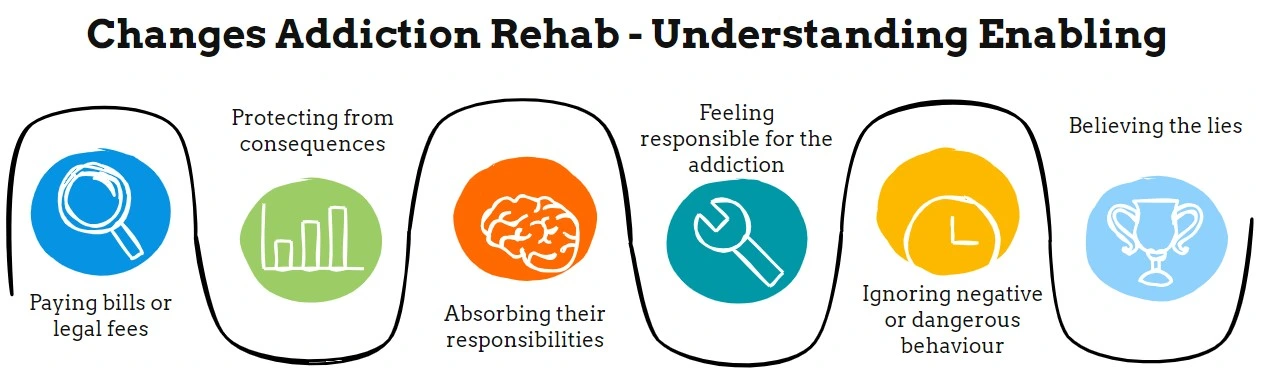
Enabling often shows up in ways that first look like love or concern. Denial is one of the most common signs, where the enabler refuses to accept the severity of the problem. Avoidance is another, where the enabler consciously avoids discussing the addiction out of fear or discomfort, letting it persist. There is also codependency, where the enabler’s self-esteem and happiness become tied to the addict, which pulls them into protecting and rescuing.
When you are in denial about a loved one’s addiction, you may be blind to the warning signs or dismiss how serious they are. Recognising that well-intentioned actions may be causing harm is difficult but necessary. It is the point where change becomes possible.
Enabling vs Empowering: Know the Difference
It is important to separate enabling the addiction from empowering recovery. Support is a crucial part of helping someone recover. Empowering recovery might mean insisting that they go to rehab. To tell the two apart, ask yourself:
- What does my enabling mean for my family and our addict?
- How does my enabling protect them from the consequences of their using or drinking?
- How does my enabling prevent them from taking responsibility?
- How does my enabling prevent them from going to rehab and getting treatment?
- What help do I need to change my own behaviour?
The table below shows the same situations handled two ways, one that enables the addiction and one that empowers recovery.
| Situation | Enabling Response | Empowering Response |
|---|---|---|
| Missed rent because of using | You quietly pay it off | You let the consequence land and offer help to get into treatment |
| Drunk and abusive at home | You make excuses to family | You name the behaviour and hold your boundary |
| Asks for money again | You hand it over to keep the peace | You say no and point them to support |
| Skips work or commitments | You call in sick for them | You let them own the outcome |
| Refuses to discuss the problem | You avoid it to keep calm | You raise it honestly and stay steady |
Enabling keeps addiction alive. It prevents or delays access to rehab and recovery.
How Enabling Affects the Addict
Enabling prevents an addict or alcoholic from seeing and dealing with the impact of their addiction, which prevents them from recovering. Here is how that plays out.
The Illusion of Control
When destructive behaviours are continuously justified or quietly accommodated, the addict may feel as if they have their addiction under control when it is actually spiralling. This false sense of control keeps them from admitting there is a problem at all.
Delayed Help-Seeking
When the consequences of addiction are constantly cushioned by the enabler, the addict may not feel any urgency to seek help. They stay in denial about the severity of their addiction, and the point at which they might have reached out gets pushed further away.
Dependency and Low Self-Esteem
When an addict’s responsibilities are continually shouldered by the enabler, it creates an unhealthy dependence. The addict never has to grow up or function independently. They never have to take accountability. Over time this reaffirms low self-esteem and a belief that they cannot handle responsibility, which can fuel the addiction further.
The Psychology of Enabling
Enabling is complex, often rooted in emotional attachment and a fear of conflict, alongside a desperate desire to help. Understanding where it comes from makes it easier to change.
Emotional attachment is often the driving force. Enablers, usually family or friends, are attached to the addicted person and do not want to see them suffer, so they cushion the harsh impacts of addiction.
Fear of conflict fuels it too. Enablers may fear that their loved one will abandon them if they stop providing support, and that fear keeps the destructive cycle going.
The desire to help can also do more harm than good. Enablers believe they are helping their loved one battle addiction, when their actions can end up feeding the very addiction they are trying to fight. As Samuel Johnson put it, “the road to hell is paved with good intentions.”
This is not about blaming the enabler. It is about acknowledging the emotional histories that drive the behaviour. Learning how we were trained to become enablers gives us clarity, and compassion for ourselves and our addicted loved ones.
Serious Addiction Is a Medical Problem, Not a Moral Failure
Changes is a licensed detox and treatment facility with medical, psychiatric and counselling teams working together. We focus on stabilising health and behaviour, not on judging people.
How to Stop Enabling an Addict
Do you find yourself covering for a loved one’s addictive behaviours or making excuses for them? Perhaps you unintentionally encourage their substance use, which would make you an enabler. Enabling is different from helping, and even good intentions can have a devastating impact. Breaking the cycle is not easy, but it is necessary for recovery.
Recognise the Signs of Enabling
Before you can change, you have to recognise that you are enabling. The signs might include:
- Ignoring the addict’s negative or dangerous behaviour
- Struggling with excessive guilt or fear about the addict’s well-being
- Blaming others or external factors for the addict’s behaviour
- Having difficulty expressing emotions around the addict
Set Boundaries and Stick to Them
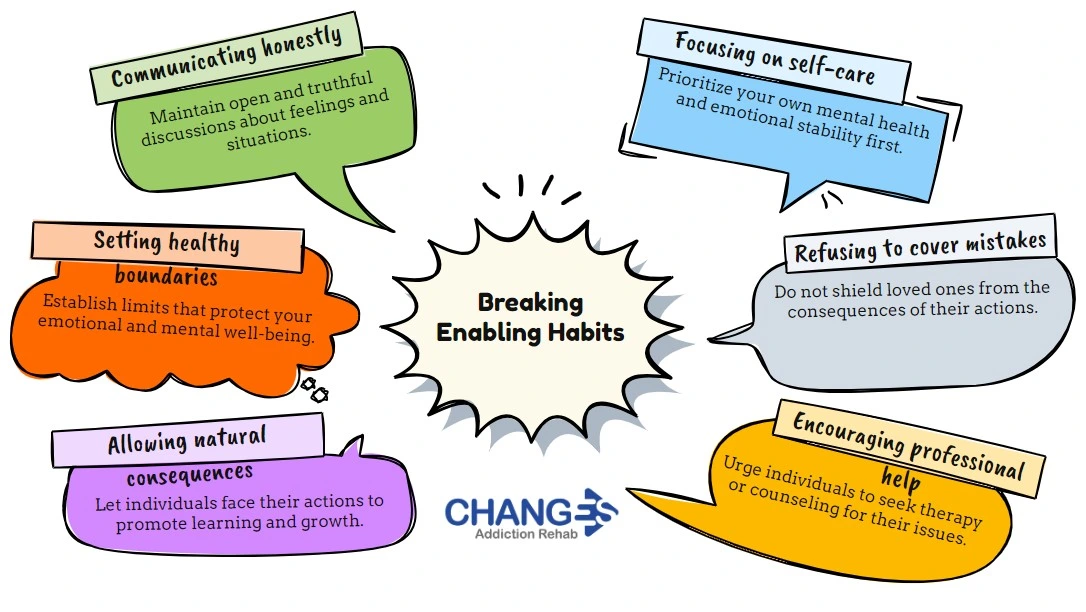
Boundaries are about deciding what you are and are not willing to tolerate. Communicate the decision clearly to the addict, and stick to it regardless of their response.
Seek Professional Help
Overcoming enabling is challenging, and you do not have to do it alone. A professional team of addiction therapists and counsellors, along with support groups, can guide you through it.
Empower Recovery, Don’t Enable Addiction
Support sobriety and encourage your loved one to seek help rather than doing it for them. Do not protect them from the consequences of their actions. Enabling is done out of love, but it is not helpful. Show love by insisting on change and supporting recovery, not addiction.
Be patient. Overcoming enabling behaviours is not quick, and everyone makes mistakes along the way. Stay committed and keep looking forward. Let your loved one get on with their own recovery work.
When Helping Hurts: How Enabling Makes Addiction Worse
It is natural to want to help a loved one in the throes of addiction. There is a thin line between genuinely helping and enabling, and it matters. Enabling commonly refers to actions that protect the addict from the consequences of their substance abuse, and it usually stems from love and concern mixed with fear. Even with good intentions, enabling can make the addiction worse by letting the addict continue down a destructive path.
Picture a loved one who is struggling with substance abuse. Out of concern you step in to soften each consequence. Without meaning to, you make it easier for the addiction to carry on. That is the moment helping quietly turns into enabling.
The Cost of Enabling to You
Enabling an addict, though often done out of love or duty, carries real costs. The costs are financial and emotional as well as physical, and it helps to understand the damage each can do.
Financial Consequences
Are you absorbing their costs or compensating for lost income? Are you covering up financial mismanagement? You might be:
- Paying bills they cannot afford because of their addiction
- Purchasing substances for them
- Handling legal fees related to their substance abuse
These costs add up over time and can leave you in financial distress.
Emotional Consequences
Enablers often feel:
- Overwhelmed by the responsibility
- Frustrated by the lack of progress
- Guilt-ridden, feeling somehow responsible for the addict’s problem
This turmoil can result in ongoing stress, anxiety and low mood.
Physical Consequences
The physical toll is often overlooked. You may lose sleep caring for the addict and ignore your own health because your focus sits entirely on them. The cost of enabling can leave you in real distress that is financial and emotional as well as physical. Look for a quality treatment centre with a family programme you can join, so you can explore your own issues too.
The Power of Tough Love
Tough love means setting clear boundaries and stopping enabling behaviours. It is about detaching with love and letting your loved one get on with their own recovery. It is not about being harsh. It is about making tough decisions with love, and this is often what gets addicts and alcoholics into treatment.
Setting Boundaries
Setting boundaries means marking out what you will and will not tolerate, so define your limits and stick to them. For the addict, that might mean drawing a line under behaviours that feed the addiction. For the enabler, it might mean refusing to provide money or cover-ups. It is not about punishment, it is about helping the addict feel the impact of their behaviour and take responsibility.
How to Set Boundaries
Communicate clearly: be concise about what your boundaries are and leave no room for misinterpretation.
Be assertive: hold firm and do not let the addict guilt-trip you into crossing them.
Follow through: if a boundary is crossed there must be a consequence, and you have to step back.
Stopping Enabling Behaviours
Stopping enabling behaviours is crucial for recovery. Enabling might include making excuses, bailing the addict out of financial or legal trouble, or turning a blind eye. Helping is doing something for someone that they cannot do themselves. Enabling is doing for someone what they could and should be doing themselves.
Steps to Stop Enabling
- Education: learn about addiction and its consequences to understand the situation
- Support: seek out support groups or counselling, which are crucial to your new stance
- Practise self-care: look after your own physical and mental health so you can cope
The path of tough love is challenging, but it is a necessary one for helping your loved one confront their addiction.
Who Enablers Are and Why They Matter
Enablers can be anyone in the addict’s immediate circle: parents, partners, siblings, friends or even colleagues. They support or perpetuate the addictive behaviour, knowingly or not, by helping the addict avoid consequences or offering financial support, or by taking over their responsibilities. Their actions heavily influence the addict’s perceptions and behaviour, and by shielding the addict they reinforce the cycle of addiction. Coming to terms with being an enabler is a difficult pill to swallow, but it is a crucial step towards breaking that cycle.
Hope for Change: A Story of Recovery
Can people really overcome enabling behaviours? Yes. There are many stories of recovery and transformation for those trapped in the cycle.
Take Mary, a mother who broke free from her enabling behaviours towards her son’s addiction. In her words: “I was always there to pick up the pieces. I paid his bills, I smoothed things over with his landlord, I even lied to cover up his problem. It wasn’t until a counsellor pointed out my enabling that I realised I was part of the problem.”
Mary’s journey was hard, but through counselling and a supportive community she changed her approach. Instead of protecting her son from the consequences of his actions, she set boundaries and encouraged him to take responsibility.
Overcoming Enabling: A Step-by-Step Process
- Acceptance: acknowledge the problem and accept that you cannot control the addict’s behaviour.
- Education: learn about addiction and enabling behaviours to understand what is going on.
- Support: seek help from professionals and join a supportive community.
- Boundaries: set and enforce healthy boundaries.
The Role of Therapy in Addressing Enabling
Therapy is essential for addressing enabling behaviours. It provides a secure environment where people can understand the effects of their actions and discover new ways to help. Therapists work with the enablers who are closely connected to the addict, not only with the addict.
Therapy for the Enabler
For someone enabling an addict, therapy can be transformative. It helps them recognise the signs of enabling and understand the harm it can cause, even when it comes from a good place. Counsellors help enablers set healthy boundaries, which can be difficult because it reshapes long-established patterns. Through therapy, enablers learn to communicate boundaries and manage any resistance or backlash.
Therapy for the Addict
Addicts and alcoholics need to take ownership of their recovery. They learn coping strategies to manage their addiction, from stress management and relaxation techniques to cognitive behavioural therapy that challenges destructive thought patterns.
Family Therapy
Family therapy addresses enabling by opening honest communication between family members so they can challenge harmful patterns together. It builds a shared understanding of addiction and grows empathy and support within the family. Therapy equips both the enabler and the addict with the tools to rebuild their relationship in a healthier way.
Triggers That Lead to Enabling
Understanding the triggers behind enabling is a first step towards breaking the cycle. These behaviours are often rooted in emotional reactions, which makes them hard to spot and harder to change.
1. Fear of Confrontation
When you are worried about causing conflict or upsetting the addict, it is easier to enable than to challenge them. Confrontation here is not about starting a fight. It is about facing the truth together.
2. Guilt
Guilt is a powerful trigger. If you feel responsible for the addict’s circumstances, you may be more inclined to protect them from consequences. Guilt can cloud your judgment and lead straight to enabling.
3. Denial
Denial lets us ignore painful realities. Being in denial about the severity of the problem leads you to downplay the addiction and enable it without realising.
4. Emotional Blackmail
Some addicts manipulate emotions to get what they want, from guilt trips to threats of self-harm. Giving in to these tactics enables the behaviour.
Breaking free from these triggers often takes professional help. Addiction experts provide strategies to help you handle these emotional pressures. Enabling an addict does not help them, it only prolongs their struggle.
Family Therapy: Breaking the Cycle of Enabling
Enabling is deeply entrenched in family dynamics. As the heart of the support system, families strongly influence a loved one’s path to recovery, and when love and care accidentally fuel the addiction, it is time for professional help. Family therapy treats addiction as a family issue, not just the individual’s problem, aiming for healing across the whole family.
Understanding Enabling Within Family Dynamics
Enabling often comes from love or fear. Family members feel they are helping by shielding the addict from harsh consequences, but these actions sustain the addiction. Common enabling behaviours within families include:
- Providing money that is likely used for drugs or alcohol
- Ignoring or downplaying the severity of the addiction
- Making excuses for their behaviour, such as blaming stress
- Cleaning up after their messes, literally and figuratively
The Role of Family Therapy
Family therapy is designed to disrupt these patterns. Therapists help families identify and change enabling behaviours so they can support recovery in a healthy way. It is not your responsibility to fix your loved one, it is about creating a supportive environment that encourages recovery without enabling the addiction. Sessions may involve:
- Education about the disease of addiction
- Improving communication and problem-solving
- Building resilience and coping mechanisms
- Strategies for self-care and maintaining boundaries
Reach out to a professional therapist if you suspect enabling behaviour. It can be the first step towards genuine healing for your loved one and your family.
Support and Communication in Overcoming Enabling
It takes an informed, supportive network to help an addict in recovery. Support here goes beyond being there for the addict. It means understanding what they are going through and finding ways to help without endorsing the addictive behaviour. Communication is the foundation the rest is built on.
Support
The most impactful support is often the emotional kind from loved ones. It means listening, showing empathy and staying patient. It is equally important to hold boundaries, making clear that you are there to assist but not to facilitate the addiction. Family and friend support has been linked to lower relapse risk in recovering addicts.
Communication
Open, honest communication is essential. It means expressing concerns about the addict’s behaviour without judgment or blame, so they feel safe to share their struggles. Active listening matters here too, going beyond the words to understand the emotions underneath and responding in a way that validates feelings without reinforcing the addiction. According to the National Institute on Drug Abuse, effective communication can improve treatment outcomes and smooth the recovery process.
The path to recovery is hard, but with consistent support and honest communication it becomes less daunting. Enabling an addict does more harm than good, and breaking the cycle is a step in the right direction.
Get Help for Yourself and Your Loved One
You have carried this alone for long enough. If you recognise your own patterns in this article, you have already done the hardest part. The next step is support for both of you.
Changes Rehab in Johannesburg runs a family programme alongside our treatment programme, so you can work on your own recovery while your loved one works on theirs. You can reach our family support team to talk through what is happening at home.
When you are ready to get someone into treatment, our team can pre-authorise the admission and walk you through medical aid and next steps. Call the admissions line on 081 444 7000 whenever you are ready.