






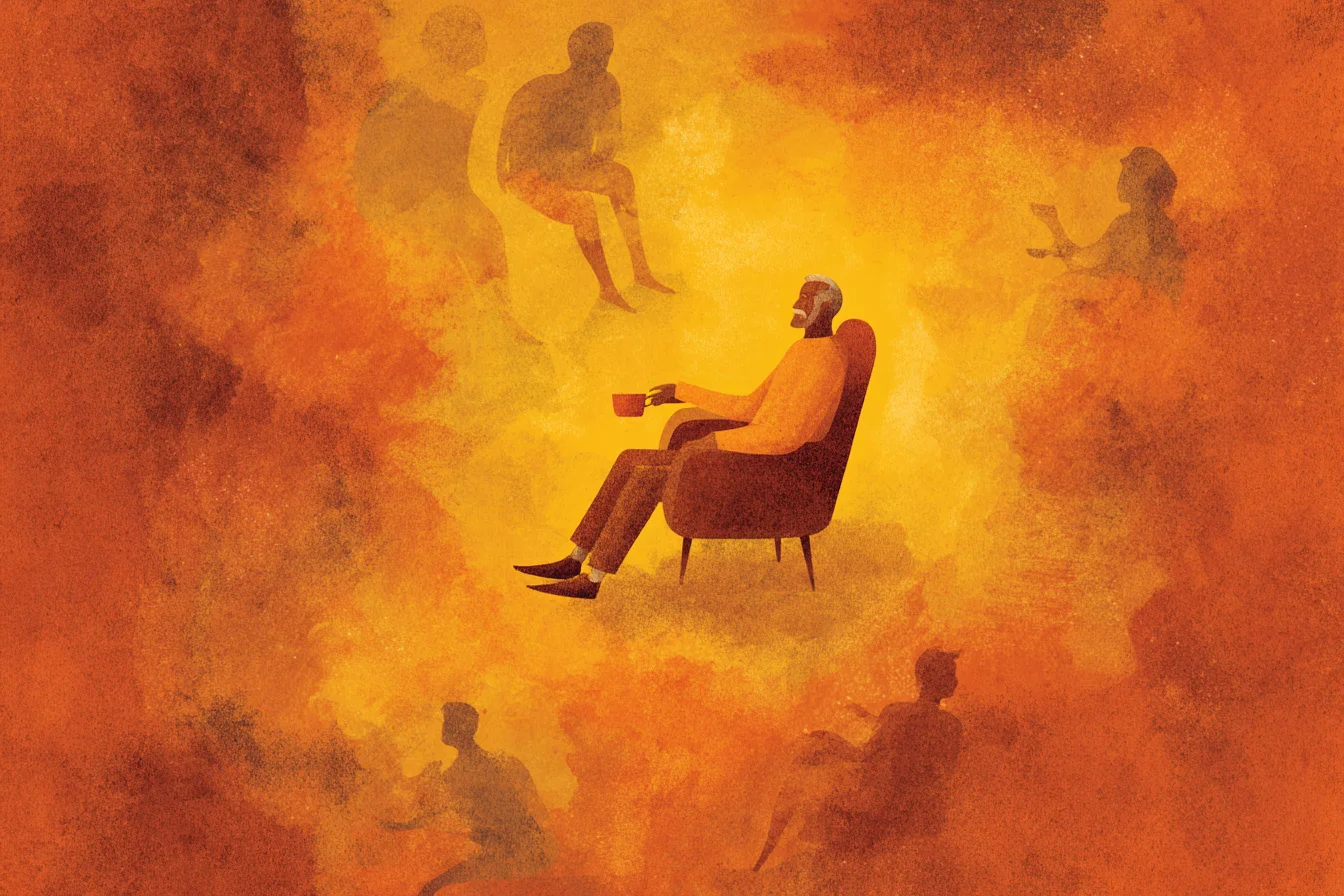
Why Do Addicts Always Blame Others for Their Addiction?
Could recognising your own blaming and denial patterns be the key to breaking the cycle of substance misuse and rebuilding trust?
Could recognising your own blaming and denial patterns be the key to breaking the cycle of substance misuse and rebuilding trust?
People with substance abuse problems use different forms of denial to keep themselves in the addictive cycle. Blaming in addiction is one such denial strategy. Denial can be a dysfunctional protection mechanism that you may use to protect yourself from having to recognise, deal with and accept the reality of what is occurring in your life. This is often unconscious.
To recover from addiction, it is incredibly important to be able to identify denial. The 12 patterns of denial were developed by international addiction expert Terence Gorski. Read on to find out more about how people with chemical dependency use blaming as a denial strategy to safeguard their addictive behaviours.
Why Do Addicts Rely on Denial?
Denial is the first issue to address when addicted persons enter treatment or try other ways of recovering from their substance use disorder.
Denial is when someone:
- Ignores reality
- Downplays reality
- Distorts reality
Reality is painful and difficult, and the addict turns to substances or other addictive behaviours to cope, in order to escape.
Denial is not stupidity, and it is not simple lying. It is the mind protecting itself from a reality that would otherwise force painful, unwanted change. As long as that reality stays blurred, the person never has to feel the full weight of the problem or act on it. This is what denial does for an addict: it buys the addiction time and keeps shame at a survivable distance.
In the words of Dr Diamond: “The addict cannot tolerate reality… Neither internal reality nor external reality”. “They find reality repugnant, uncomfortable, and overwhelming, and prefer, like the psychotic, withdrawal into fantasy, bliss, or oblivion over reality.”
The first of the 12 steps of Alcoholics Anonymous, and other 12-step programmes, is completely geared at confronting and overcoming denial: We admitted that we were powerless over alcohol/drugs, that our lives had become unmanageable.
Without truly confronting and overcoming denial, no matter how much you want to get better, denial will trip you up and prevent you from recovering. This can be a tricky process because denial comes in so many forms and has become so normalised to the addict that they struggle to even recognise when they are using a given pattern of denial.
 Why Do Addicts Blame Others for Their Addiction?
While addiction is a brain disease and many genetic, environmental and social factors influence the likelihood of someone developing an addiction, blaming these factors for one’s addiction is not helpful and only serves to keep one in denial.
Addicts blame their addiction on any number of things such as past trauma, depression or their upbringing. They often blame other people for ‘pushing’ them to use drugs or alcohol and for the negative consequences that occur as a result of their addiction. They may blame others who abuse them or they blame loved ones who aren’t supportive or generous enough. They might even blame their problems on luck.
While some of these factors might influence their addiction, no one thing is fully to blame. If an addict casts the blame on something or someone else, they absolve themselves of the responsibility of dealing with their addiction. While they didn’t ask to be an addict, it is their responsibility to get help and do something about their addiction. It is their responsibility to choose sobriety and recovery.
For example, if your parents have diabetes, you may have a genetic predisposition placing you at high risk of developing diabetes. After you are diagnosed with diabetes, it helps no one to blame your parents for your disease and then do nothing about your illness. If you want to get well, you need to see a doctor as well as take your medication and change your lifestyle as prescribed. The same is true for addiction.
Accepting and blaming are different. We tend to blame when we want to cop-out or avoid dealing with something.
It is important to deal with the factors that trigger you to use or drink, such as trauma, but laying the blame on these factors will only keep you sick and stuck in the addictive cycle. You need to become accountable for your choices if you want to recover from addiction.
In this article we have explained how the denial pattern of blaming works to keep you in denial and gives you an excuse to do nothing about your problem. We have shown how blame and acceptance are different and that you need to stop blaming if you want to recover from addiction.
Do you think you are in denial? Contact us for an assessment today.
Read more about the 12 patterns of denial below:
- Avoidance With Denial
- Absolute Denial
- Minimising With Denial
- Rationalising With Denial
- Blaming With Denial (this page)
- Comparing With Denial
- Compliance With Denial
- Manipulation With Denial
- Flight Into Health
- Recovery by Fear
- Strategic Hopelessness
- The Democratic Disease State
Blaming Is the Fifth of the 12 Patterns of Denial
Blaming is the fifth of Gorski’s twelve patterns of denial, and it rarely travels alone. The pattern that usually follows is comparing, where the addict measures themselves against people who seem worse off to prove they do not really have a problem. Reading through the patterns in order makes each one easier to spot in real time.
Recognising the blame is the hard part. Acting on it is where things actually change. You might see this pattern in yourself, or you might be the relative worn down by carrying it. Either way, Changes can help you take the next step: call our team on 081 444 7000 or book a confidential assessment.
Why do addicts always blame others for their addiction? Blaming is the fifth of the 12 patterns of denial. Learn to recognise it and break the cycle.. Changes team counsellors are here to help you.Why Do Addicts Always Blame Others for Their Addiction?